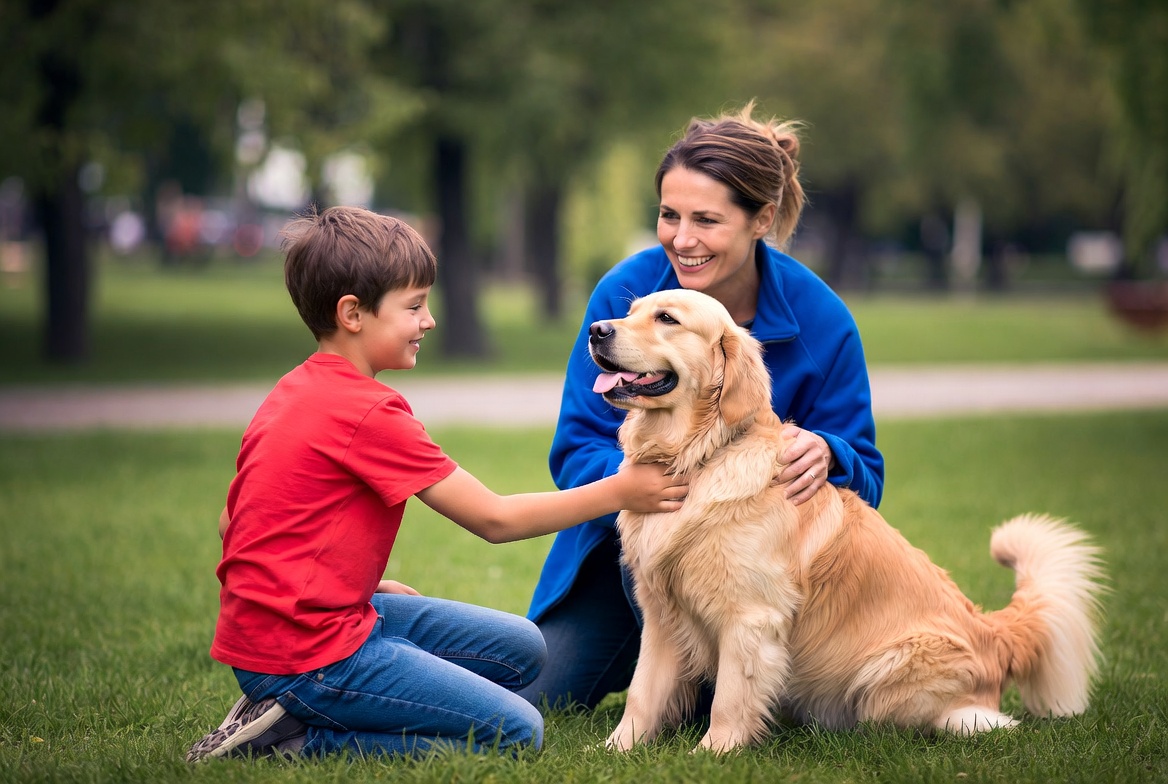
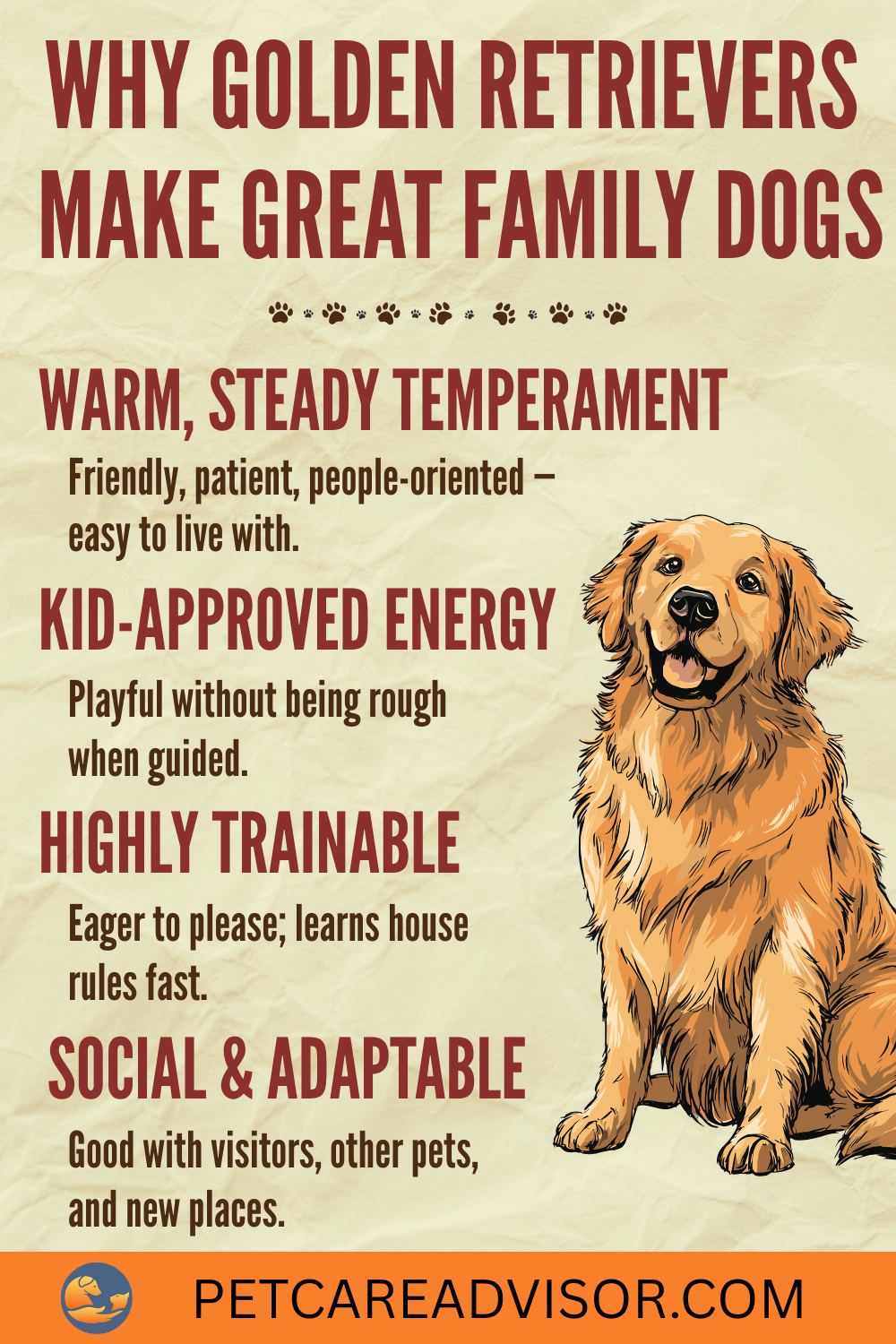
Golden Retriever at a Glance
Size: Medium–large
Typical weight: ~55–75 lbs (varies by dog)
Energy level: Medium to high
Shedding: Heavy, year-round with seasonal peaks
Good with kids: Often excellent, with supervision and training
Life expectancy: Around 10–12 years
Best for: Active households, people home often, families who enjoy outdoor time
Goldens are people-focused, social, and usually want to be involved in whatever you’re doing.
They’re rarely “low maintenance.” If you’re looking for a relaxed couch potato who’s fine being left
alone all day, this probably isn’t the breed you want.
Is a Golden Retriever a Good Fit for Your Home?
Before you fall for the fluffy puppy face, it’s worth being honest about your lifestyle and expectations.
What Goldens Are Known For
- Friendly with people and other dogs when properly socialized
- Very trainable and usually love food and praise
- Often great family companions when supervised around kids
- Enjoy being close to their family and involved in daily life
What Can Be Challenging
- High shedding and regular grooming needs
- Daily exercise and mental stimulation requirements
- Adolescent chaos if training is inconsistent
- May struggle with long days alone, leading to anxiety or destructive behavior
- Big dog realities: stronger leash pulling, more food, higher impact if they jump
A Golden may be a good match if you…
- Enjoy daily walks and outdoor time
- Don’t mind hair on your floors, couch, and clothes
- Have time and interest in training and enrichment
- Can budget for quality food, grooming tools, and veterinary care
- Like the idea of a dog that wants to be part of your everyday life
Think twice if you…
- Are away from home long hours with no dog-walking help
- Strongly prefer a low-shedding or “hypoallergenic” dog
- Don’t enjoy training or don’t have time for it
- Want a very calm, low-activity dog
Still unsure? Ask the Pet Care Coach how a Golden might fit your lifestyle.
Golden Retriever Puppy Vet & Care Timeline (First Year)
Every puppy is different, and your vet’s recommendations may vary. But here’s a general idea of what to expect in
your Golden’s first year.
8–12 Weeks
- Initial vet exam and weight check
- Core vaccines and deworming
- Microchip discussion (if not already done)
- House training and crate training basics
- Early socialization and gentle exposure to new people, sounds, and environments
- Feeding schedule and age-appropriate puppy food (often large-breed puppy formulas)
3–6 Months
- Vaccine boosters as recommended by your vet
- Spay/neuter timing discussion tailored to your puppy
- Teething and chewing management, with safe chew options
- Behavior check-in: jumping, mouthing, and early leash manners
6–12 Months
- Growth and body condition monitoring to avoid over- or under-feeding
- Watching for early signs of joint issues (stiffness, limping, reluctance to jump)
- Transition from puppy to adult food (often after 12 months, with vet guidance)
- Ongoing training and socialization to support a well-adjusted adult dog
Helpful questions for your vet: Is my puppy’s weight on track for a growing Golden? When should we plan spay/neuter?
What should I watch for with joints and growth?
Need help making your question list? Ask the Pet Care Coach, then bring it to your vet.
Don’t have a vet yet? Search for a clinic near you.
Everyday Life With a Golden Retriever
Daily routines are where most Golden owners feel the difference between “manageable” and “overwhelmed.”
A little structure goes a long way.
Exercise Needs
Most healthy adult Goldens need:
- At least one decent walk every day
- Plus playtime (fetch, tug, training games) or off-leash running in a safe area
- Occasional higher-intensity activities like swimming or hiking, if your vet approves
Under-exercised Goldens often show it through restlessness, attention-seeking behavior, or destructive chewing.
Training & Socialization
Golden Retrievers are smart and usually love to learn, but they don’t train themselves. Focus on:
- Basic manners: sit, down, stay, come, leave it, loose-leash walking
- Household rules: no jumping on guests, no counter-surfing, calm door manners
- Socialization: positive experiences with different people, dogs, places, surfaces, and sounds
Puppy classes or basic obedience classes can be especially helpful for first-time Golden owners.
Mental Enrichment
Goldens often enjoy using their brains as much as their legs. Consider:
- Food puzzles and slow feeders
- Scent games (hide treats around a room and let them sniff them out)
- Short training sessions throughout the day
- Rotating toys instead of leaving everything out at once
Even 10–15 minutes of mental work can take the edge off an energetic dog.
Nutrition Basics
Your vet is your best resource for specific diet advice, but in general:
- Use a high-quality, age-appropriate dog food (often large-breed formulas while growing)
- Measure meals instead of free-feeding
- Watch body condition rather than just the number on the scale
- Use treats thoughtfully so they don’t become a huge part of daily calories
Want help sketching a daily routine for your Golden? Ask the Pet Care Coach, then review the plan with your vet.
Golden Retriever Grooming & Shedding
If you share your home with a Golden, you’ll share it with Golden hair too. A simple grooming routine makes
it much easier to live with.
The Double Coat
Goldens have a soft, dense undercoat and a longer outer coat that offers protection. This combo means:
- Shedding year-round
- Heavier shedding in spring and fall (“blowing coat”)
Basic Grooming Routine
Most Goldens benefit from:
- Brushing several times a week (or daily during heavy shedding)
- Bathing roughly every 4–8 weeks, or as needed
- Nail trims every few weeks, depending on wear
- Regular ear checks and cleaning as advised by your vet
Regular brushing helps reduce matting, especially behind the ears and around the tail and hindquarters,
and gives you a chance to check the skin for hot spots, bumps, or irritation.
Ear & Paw Care
- Ears: Floppy ears can trap moisture and debris. Ask your vet to show you how to clean them and what to use.
- Paws: Check for cracks, debris between toes, and overgrown nails.
Should You Shave a Golden?
It’s tempting to shave a very furry dog in hot weather, but with double-coated dogs like Goldens,
shaving can interfere with how their coat protects them from sun and heat and may lead to patchy regrowth.
Before making big grooming decisions, talk with your vet and a professional groomer about what's best for your dog.
Common Health Issues in Golden Retrievers
Not every Golden will experience these issues, but some conditions show up more frequently in the breed.
Your vet can give you a more detailed, personalized view based on your dog.
Joint Problems
Goldens are prone to hip dysplasia, elbow dysplasia, and general arthritis as they age. Watch for:
- Stiffness when getting up
- Limping, especially after exercise
- Reluctance to jump into the car or climb stairs
Skin & Ear Issues
Many Goldens have allergies that show up as itchiness, licking paws, recurrent ear infections, or hot spots.
Signs to watch for include:
- Persistent scratching, licking, or chewing
- Red, irritated skin
- Shaking the head or scratching at the ears
- Odor or discharge from the ears
Weight & Lifestyle
Goldens love food. Without careful portion control and exercise, they can become overweight, which increases the risk of
joint issues, diabetes, and other health problems.
More Serious Conditions
Some cancers and heart conditions are more frequently reported in Golden Retrievers.
Early detection can make a difference, which is one reason regular vet visits and paying attention to
subtle changes in behavior or energy are so important.
Important: Only your vet can diagnose and treat health problems. Petcare Advisor can help you organize your thoughts
and questions, but we can’t tell you what a specific symptom means for your individual dog.
When to Call a Vet vs. Watch at Home
It’s not always obvious what’s an emergency and what can wait. When in doubt, it’s always safer to contact
your vet or an emergency clinic.
Call Your Vet (or an Emergency Clinic) ASAP If…
- Your dog is struggling to breathe or seems panicked
- There’s sudden collapse, extreme weakness, or confusion
- Repeated vomiting or diarrhea, especially with blood
- A swollen, painful abdomen
- Gums that look very pale, white, or blue
- Your dog can’t put weight on a leg and is clearly uncomfortable
Usually Safe to Monitor, But Call if It Worsens…
- Mild soft stool but otherwise bright and active
- Occasional paw licking with no open sores
- A skipped meal in an otherwise healthy dog
- A small limp that improves quickly with rest
If you’re on the fence, a quick call to your vet’s office can help you decide what to do next. Many clinics can at least
tell you if it sounds like an urgent situation.
Save your nearest emergency vet’s number in your phone before you need it.
Golden Retriever Care by Life Stage
Goldens change a lot from puppyhood to their senior years. Your care routine should shift with them.
Puppies & Adolescents
- Fast-growing, often clumsy, and full of energy
- Need frequent potty breaks and structured house training
- Benefit from early socialization and kind, consistent training
- Still developing joints—your vet can guide you on safe exercise levels
Adult Goldens
- Energy levels may mellow, but most still need daily activity
- Good time to maintain healthy habits: diet, weight, and ongoing training
- Mental enrichment remains important to prevent boredom and problem behaviors
Senior Goldens
- May slow down, sleep more, and need shorter, gentler walks
- Joint support, comfortable bedding, ramps, and non-slip rugs can help
- Often need more frequent vet checkups to catch changes early
- Watch for subtle shifts: weight changes, drinking more water, mobility or mood changes
Not sure what to ask your vet at your dog’s next life stage?
Ask the Pet Care Coach to help you build a checklist.
Golden Retriever FAQs
Are Golden Retrievers good family dogs?
Often, yes. Golden Retrievers are typically friendly, people-oriented, and patient with children when they’re well-bred,
socialized, and trained. Supervision around kids is still important, especially with younger or very energetic dogs.
How much exercise does a Golden Retriever really need each day?
Many adult Goldens do best with at least one decent walk daily plus some play or mental work.
Some will need more, some a bit less. Your vet can help you tailor exercise to your dog’s age, health, and personality.
Why does my Golden shed so much—and can I reduce it?
Goldens have a double coat and shed year-round, with heavier shedding during seasonal changes.
Regular brushing, a healthy diet, and basic grooming help manage shedding, but they won’t eliminate it entirely.
What are common health problems in Golden Retrievers?
Joint issues (like hip dysplasia), allergies, skin problems, ear infections, weight gain, and certain cancers
are more commonly seen in the breed. Regular vet exams and paying attention to changes at home can help catch problems earlier.
How often should a Golden see the vet?
Most adult dogs should see the vet at least once a year for a wellness exam and vaccinations.
Puppies and seniors often need more frequent visits. Your vet will recommend a schedule based on your dog’s age and health.
Can I leave a Golden Retriever home alone while I’m at work?
Many Goldens can handle some alone time if they’re gradually trained for it and their exercise and mental needs are met.
However, they’re not typically well-suited to being alone all day, every day, with no interaction or breaks.
Dog walkers, daycare, or help from family and friends can make a big difference.
Next Steps for Golden Retriever Parents
Living with a Golden Retriever can be incredibly rewarding. They’re affectionate, funny, and often deeply connected
to their people. They do best in homes that can handle their energy, hair, and need for attention and routine care.
You don’t have to figure everything out alone. Build a good relationship with a veterinarian you trust, keep an eye on
small changes, and make steady, practical improvements to your dog’s routine over time.